
In a conversation today, transformative experiences (and the psychology research and philosophy behind them) came up. I mentioned Damascius and some of the stuff he says about Dionysos. (Even though I have not actually read Damascius' full discussion of the Phaedo, I've gleaned enough by now to have seen what people say about it and … Continue reading I Made a Symbol in PowerPoint
Tag: platonism
Theological Thoughts, Collated, at the End of a Gregorian Decade
In polytheism, a conversation happened several years ago that Yvonne Aburrow reminded me of recently — something about devotional versus relational polytheism. I now remember my brow furrowing when I saw it in 2015. The distinction seemed nonsensical to me, a way of slicing up and fragmenting a fundamental position about Gods being many and … Continue reading Theological Thoughts, Collated, at the End of a Gregorian Decade
Some Quotations from Damascius
I finished reading Damascius' Lectures on the Philebus. Why does the Cause associate itself with the mixture? Because the mixture is all-embracing, while the Cause itself is all things. For what is simple cannot comprehend its power, which, transcending unity, comprises all things in an ineffable way. For this reason the divine Iamblichus says that it … Continue reading Some Quotations from Damascius
A Miscellany of Quotations — Majercik, Bryant, Damascius
First, for several days, I have had a brainworm from the Chaldean Oracles fragments. (This isn't getting a header because it's a single quotation at the beginning.) It's the phrase sober up from Fragment 15, trans. Ruth Majercik: And you do not know that every god is good. O, drudges, sober up … However, my … Continue reading A Miscellany of Quotations — Majercik, Bryant, Damascius
A Miscellany of Quotations — Damascius and Kongtrul
From Damascius' Lectures on the Philebus First, the translator, L.G. Westerink — or the Prometheus Trust when they did their monograph — capitalizes Gods. I only just admitted that was a good decision after waffling for more than a decade, but this is a happy thing to see in a book. The Philebus is the Platonic dialogue in … Continue reading A Miscellany of Quotations — Damascius and Kongtrul
A Miscellany of Quotations — Shaw and Kongtrul (with some Addey)
I finished my Goodreads annual book challenge about a month ahead. There are still more books I absolutely need to read. Such is the struggle of a bookworm 📖🐛. From Theurgy and the Soul Gregory Shaw "Heat" (tapas/yoga : thermon/theurgy) is awakened by, or directly related to, the "breath" (prana/yoga : pneuma/theurgy). When sufficiently heated, … Continue reading A Miscellany of Quotations — Shaw and Kongtrul (with some Addey)
Maxim 62: ἐλπίδα αἴνει
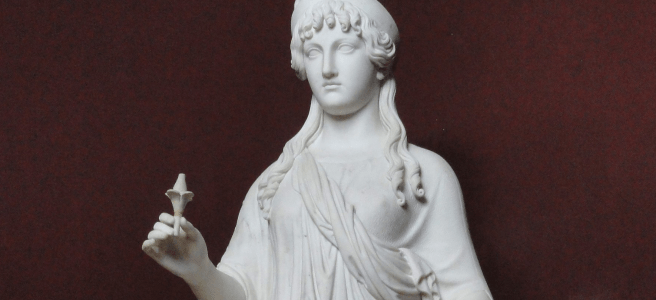
I. To Elpis (Hope) Elpis, you remain in the jar, the potential of libations. Before words are spoken, on the tip of the tongue, among our racing desires, adventurous, grasping thoughts, you shine like a struck nebula, dispensing grace like flowers. You are the brightness we grasp, unseeing the Fates who know the topography of … Continue reading Maxim 62: ἐλπίδα αἴνει
In Which Some Comments Are Made About the Word Theurgy
In my blog post about reading Iamblichus’ On the Mysteries, I said that theurgy is “basically a fancy word for traditional cultus.” The post has gotten a lot of reach, with most referrals from Facebook (where I can’t see anything), but it was also posted to a Reddit board called r/Occult by someone. A Reddit … Continue reading In Which Some Comments Are Made About the Word Theurgy
Plato-Related Thoughts After Reading a Few Lojong Slogans
Recently, my girlfriend and I have been attending a Buddhist LGBTQ sangha, which holds a meditation once a week, in the Shambhala tradition. It's 90 minutes long, with a combination of sitting and walking meditation followed by scriptural discussions. While I am not a Buddhist, I can appreciate a lot of Buddhism — the discipline … Continue reading Plato-Related Thoughts After Reading a Few Lojong Slogans
 KALLISTI