
Know thyself is the maxim that is given to us by the God at Delphi. Plato’s Alcibiades I and the commentary tradition surrounding it establish that the self is the soul, hereafter interchangeably described as the soul or the psūkhe (IPA: /psiˈçi/), which is using the body as an instrument. Plato’s Republic and the Platonic … Continue reading On the soul’s descent; or, a cosmic web of thoughts and ideas, barely arranged
Tag: science
Some Verses After Reading Proclus’ Platonic Theology 59-60 (Book IV, Chapter 20)
Even within the vacuum, physics awaits, ever-quiet — connecting-receiving stillness, infusions of illuminations, the foamy fizz of particles coming to be, ebbing to nothing — so delicate, voidless, lyrical.
Some Musings on the (Physical) Universe
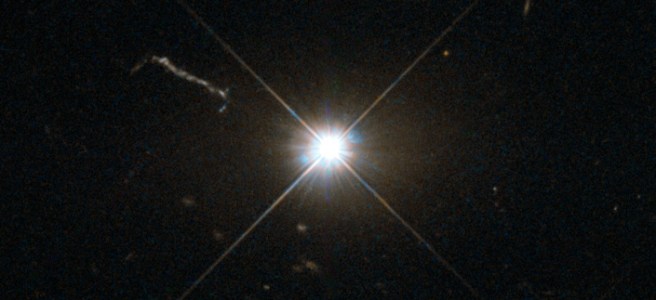
In late November, I finished writing an article about the Nobel laureates in physics, which focused on providing a citation analysis of each of them after a brief summary of the black hole science that led to their awards. In writing the narrative, I realized fairly early on that I could draw on what Proclus … Continue reading Some Musings on the (Physical) Universe
Black Holes, Chanting That Apollon Boreas Thing, Symbols, and Poetry
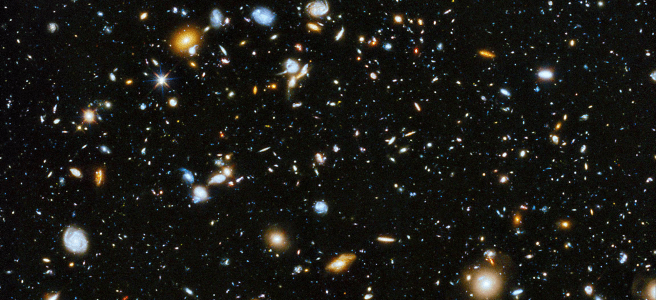
Apollon who gleams, who fills us up like a basin —what light within lightlessness?The ancients wrote that all could be illumined —but what illumination for the edge beyond which lightdances eternal with itself alone, bound and liberated,unseen by all, where space dances out timeand time ricochets oracular in the darkest stars?Does it mean that the … Continue reading Black Holes, Chanting That Apollon Boreas Thing, Symbols, and Poetry
🦠 Viral Life 🦠
On Thursday, I attended a virtual boot camp for librarians. This year, the faculty presentations were focused on reviews of basic virology and immunology. The virology presentation was very fascinating, and I'd like to discuss it in brief here because I love trees. In Proclus' commentary essays on the Republic, plant life came up, specifically … Continue reading 🦠 Viral Life 🦠
A Miscellany of Quotations — Proclus and Aguirre
This post is mostly about reading Proclus' Timaeus commentary in translation, with a bit of modern science writing thrown into the mix. It all works out harmoniously.
Commonplace Book: More From Proclus’ Commentary on the Myth of Er
A batch of quotations (in French) from Proclus' essay on the Myth of Er, selected because they're very interesting. One of them is a reincarnation story.
A Cosmology Analogy for Something in Iamblichus
It occurred to me while reading an article in Scientific American about misconceptions people have about cosmology that there are similar challenges when trying to visualize the systems in philosophers like Iamblichus and Proclus. I'm blogging briefly about it because (a) I get to talk about astronomy and (b) maybe it's useful to others. (Now that … Continue reading A Cosmology Analogy for Something in Iamblichus
Exoplanets, Exolife, and Gods
The Nobel Prize in Physics announced on Tuesday went to cosmology and exoplanets — the second half specifically to two people who discovered a planet around a Sun-like star. In October 1995, Michel Mayor and Didier Queloz announced the first discovery of a planet outside our solar system, an exoplanet, orbiting a solar-type star in our home galaxy, the … Continue reading Exoplanets, Exolife, and Gods
 KALLISTI